What Best Describes Niccolo Machiavelli Philosophy
Niccolo Machiavelli 14691527 was the highly talentedcontroversial Italian thinker. England became Protestant under Henry VIII returned to Catholicism for a brief time before settling for Protestantism under Elizabeth I.
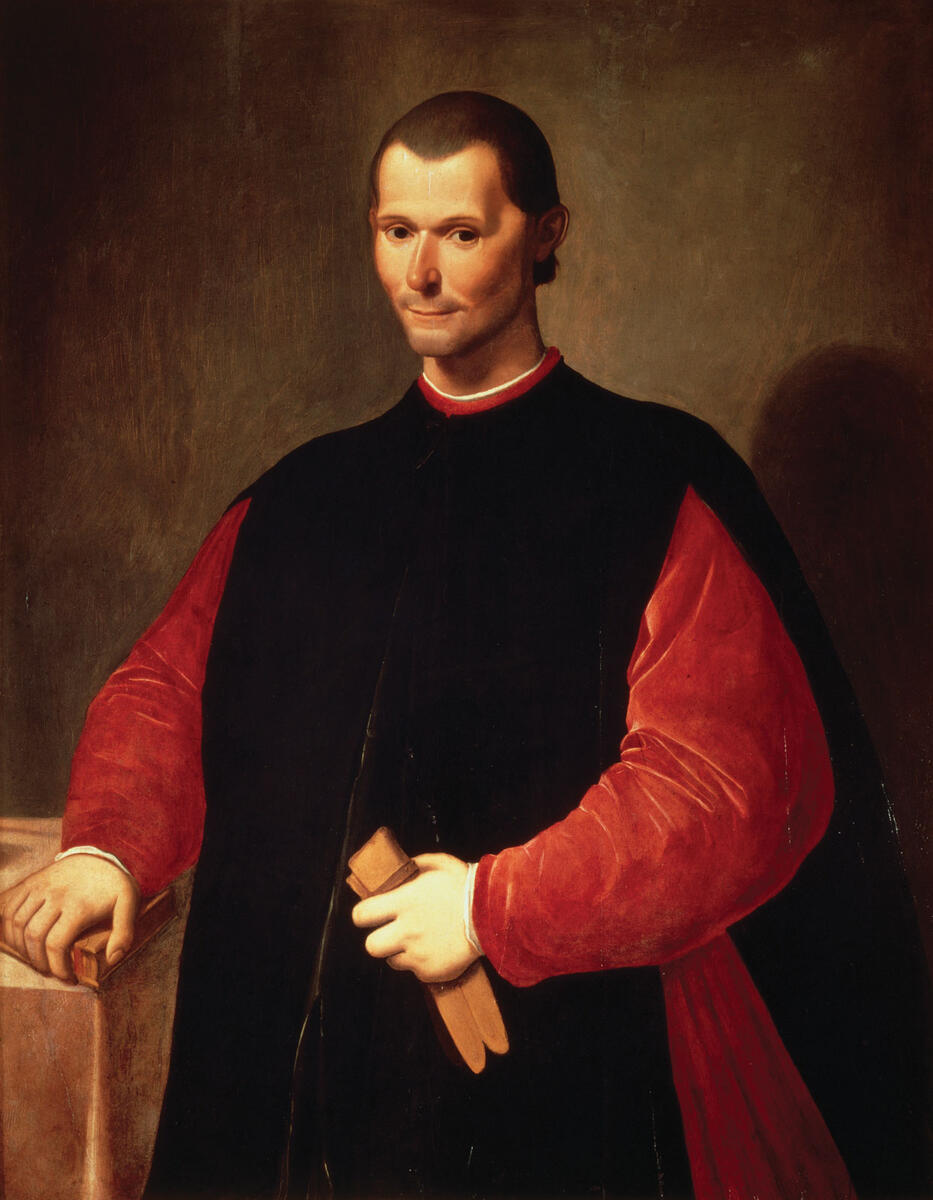
What Can You Learn From Machiavelli Yale Insights
According to Machiavelli one will only survive in politics if he plays his cards well.
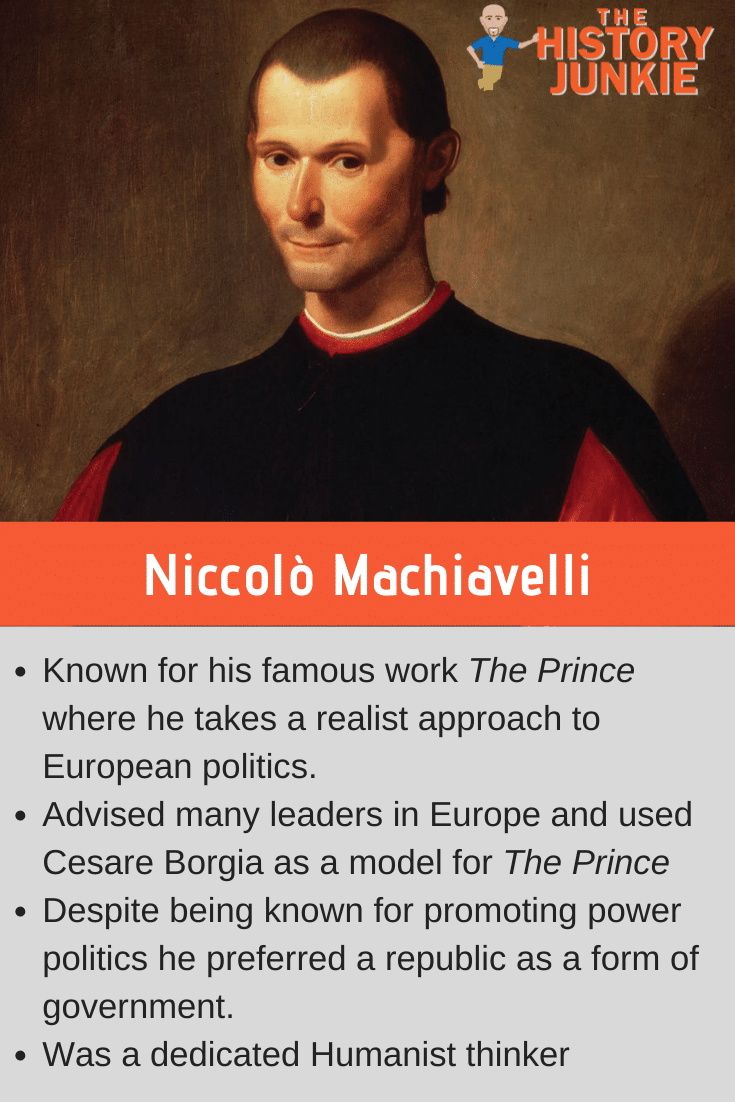
. It assumes an amoral context whereby his assertions are said to be absent of morals. List of other political and historical works by Niccolo Machiavelli are as follows. Niccolò Machiavelli born May 3 1469 Florence Italydied June 21 1527 Florence Italian Renaissance political philosopher and statesman secretary of the Florentine republic whose most famous work The Prince Il Principe brought him a reputation as an atheist and an immoral cynic.
Which statement best describes the the impact of the Protestant Reformation on England. There are as many theories about the true meaning of The Prince as there are scholars of the subject. For him a true prince should not be conventionally religious but he should be in a position to make the people religious.
Relatively little is known for certain about Machiavellis early life in comparison with many important. For instance Machiavelli strongly opposes the use of mercenaries as well as the use of auxiliary or foreign troops that might not be loyal to the prince. Niccolò di Bernardo dei Machiavelli the third child and first son of the lawyer Bernardo di Niccolò Machiavelli and his wife Bartolomea di Stefano Nelli was born in Florence Italy on 3rd May 1469.
Yet of all his books it is the one that affords the least sure clue to the workings of his mind. His advice to politicians through his writings has been questioned by many people. This does not render his assertions immoral.
Machiavelli stated that it would be best to be both loved and feared. At a young age he became a pupil of a renowned Latin teacher Paolo da Ronciglione. While the great fear of God can simply be replaced by the fear of a prince Niccolo believed having a true religion is essential in order to keep a republic in place.
Some historians and commentators have described the book as the outright unethical and at best a dishonorable way of staying in power. Many of his words have become popular quotes over time. Machiavelli hated his new life.
1527 was a civil servant in the 1498 Florentine Republic who after he lost his position in the Medici coup of 1512 wrote two of the most influential works of Renaissance Italian political theory The Prince 15131514 and the Discourses on the Ten Books of Titus Livy 1514151515181519. ˌ m ɑː-. Machiavelli presents it as a series of lessons on how a republic should be started and structured.
He studied in depth Roman history searching for keys to success in politics and wrote numerous books. This paper will subsequently deliver out both arguments with the purpose of ascertaining whether Machiavellis philosophy that the ends justify the means is actually an immoral. Much of The Prince is devoted to discussing military issues.
He was a philosopher of Renaissance Italy Machiavelli both participated in and wrote prominently on political matters to the extent that he has even been identified by some as the father of modern political science. Machiavellis Philosophy As Amoral. He also touched on totalitarian themes arguing that the state is merely an instrument for the benefit of the ruler who should have no qualms at using whatever means are at his disposal to keep the.
A political philosophy movement or regime such as that of the Fascisti that. His most famous work was a book called The Prince. Among the most widely-read of the Renaissance thinkers was Niccolò Machiavelli a Florentine politician who retired from public service to write at length on the skill required for successfully running the state.
Niccolò Machiavelli b. Impatient with abstract reflections on the way things ought to be Machiavelli focussed on the way things are illustrating his own intensely practical convictions. This book contains some of the best quotes from Niccolo Machiavellis work and life that would certainly appeal to everyone.
Niccolò di Bernardo dei Machiavelli ˌ m æ k i ə ˈ v ɛ l i also US. Rarely rendered Nicholas Machiavel. It has been a common view among political philosophers that there exists a special.
Discorso sopra le cose di Pisa 1499. The amoral structure of deliberation in Machiavellis work has been argued as being neither moral nor immoral. Niccolo Machiavelli died in 1527 at the age of 58.
It is for this reason that the adjective Machiavellian emerged to be synonymous with adjectives like manipulative cunning deceitful and among others. Although never directly stated in the book the end justifies the means is often quoted as indicative of the Pragmatism or Instrumentalism that underlies Machiavellis philosophy. Niccolo Machiavelli The Prince.
These collections of Niccolo Machiavellis most famous quotes has been excerpted from his writings papers and thoughts. The Prince still widely read in fact the only one of Machiavellis books that has ever been widely read is the basis of his evil reputation. But since the two rarely come together anyone compelled to choose will find greater security in being feared than in.
Niccolo Machiavelli is a writer that is considered as a political vision this is because of his political theory that has been described by analysts as beyond analytical understanding. Niccolo Machiavellis insertion that the ends justify the means has coined numerous reactions and controversies in regard to its morality stand. He is also seen as a proponent of deeply questionable some would argue.
Power Virtù and Fortune. 3 May 1469 21 June 1527 was an Italian diplomat author philosopher and historian who lived during the RenaissanceHe is best known for his political treatise The Prince Il Principe written about 1513 but not. It is a larger work than The Prince and it more openly explains the advantages of republics while containing similar themes.
Machiavellis ideas have been summarized as the end justifies the means but he never wrote such a thing.
Niccolo Machiavelli Facts Writings And Accomplishments The History Junkie

Niccolo Machiavelli Political Science
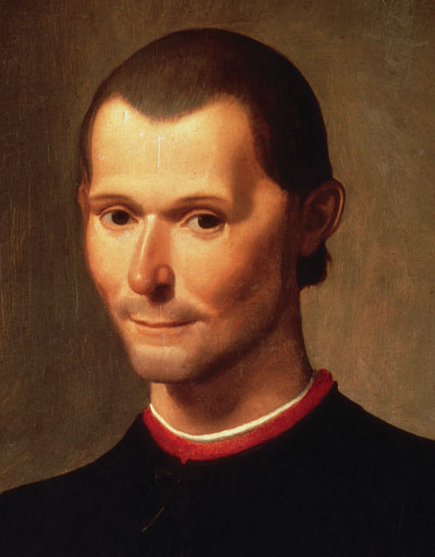
Machiavelli Niccolo Internet Encyclopedia Of Philosophy
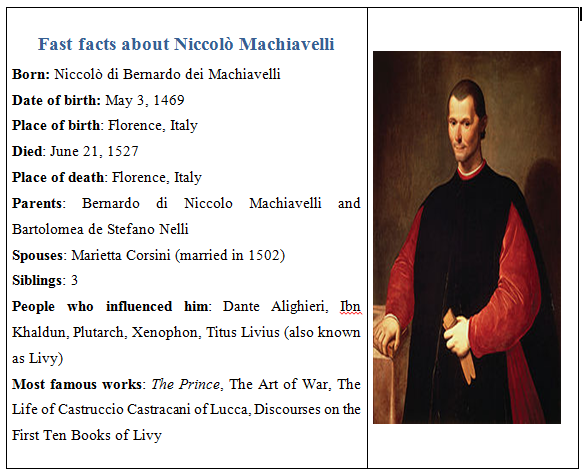
Niccolo Machiavelli Political Philosophy Beliefs Notable Works Facts Accomplishments World History Edu


Comments
Post a Comment